Monday, April 30, 2018

Some tips on adult learner retention

Always a problem with adult students. From edmentum.
Adult education programs are multifaceted and cater to a complex demographic cross-section of their communities. They may serve individuals learning English, improving their job skills, completing their high school diploma or GED®, or preparing for various college and career pathways. These groups of learners are not only arriving with unique learning needs but also are bringing with them challenges from the real world, such as transportation, childcare, and financial obligations. Given these diverse and complex situations, how can we address adult learners and keep them engaged? 
There are three key areas we can focus on: 
  • Using data for action and responsiveness
  • Adapting the instructional landscape
  • Integrating community services with skills 
The starting point here is data. We collect data on many things in education. On a daily basis, we account for the number of learners who attended class, the scores they received on their latest test, and what gains they may have made. Data, however, not being static can reveal a great deal beyond the numbers. Using and interpreting the information we collect from our learners can allow us to respond to their needs instructionally, as well as beyond the classroom.

Tuesday, April 24, 2018

Could this be

Where colleges are heading? Blended learning dominating and hybrid institutions? From The Atlantic.

The Future of College Looks Like the Future of Retail
DeMillo says he’s already seen the physical-digital dichotomy start to dissolve. He remembers when, a few years ago, Georgia Tech launched an online master’s degree in computer science, and students in the program started showing up at university-affiliated events in their hometowns. Some of the online students even traveled to Atlanta for commencement—the first time many of them had ever set foot on the campus. “They wanted to see in person the professors they got to know over video,” DeMillo said. “Students don’t have a problem blending the two experiences, either for efficiency or because they are digital natives.” 
Of course, blending learning experiences in this way is not always a smooth, or even feasible, process for many traditional colleges. Most of them are not designed to allow students to take just one course at a time or to toggle between online and face-to-face classes; taking a class on most campuses requires enrolling as a student in a full-fledged degree or certificate program and then choosing to participate exclusively in either online or in-person classes. “While universities have all these resources for lifelong learning, we also have all the constraints in how the model currently works,” said Carissa Carter, the director of teaching experiments at Stanford University’s Hasso Plattner Institute of Design. 
In 2014, the d.school, as the Stanford institute is known, sponsored a project in which undergraduates were tasked with rethinking what a college education will look like in 2025. One of the results was a design for a lifelong, on-and-off education experience. It was called the “open loop university” and would admit students for six years of study that could be undertaken at any time. Under this system, students could “loop out” after two years to go work and then “loop in” a few years later, with four years left on the clock if they wanted to try something else. The idea is that students who returned after looping out could use the time that remained to retrain for new careers later in life, whether in their 30s or 50s.

That particular vision is not likely to be realized anytime soon, but some colleges are thinking along similar lines. Several universities, including MIT, Penn, and Boston University, recently started a type of online degree called a “MicroMasters” as a way for students to begin work on a graduate degree without committing to a years-long program. Students who do well and pass a set of proctored exams earn a MicroMasters, equal to somewhere between a quarter and a half of of a typical master’s degree. Top performers can then apply for slots in a full master’s program from the universities, to be worked toward in-person; if accepted, they would be only a semester or two away from finishing a full master’s degree. When MIT launched its MicroMasters, in 2015, it expected 200,000 students would enroll across all programs; within the first nine months, more than 1.3 million people signed up.

Monday, April 23, 2018

When you're irritated with your continuing education colleagues

Remember these three things. And then you won't feel so bad. From The Muse.

3 Things You Need to Remember When Your Co-workers Are Driving You Insane
1. Co-workers Make Great Sounding Boards 
One of the things I loved most about having my co-workers within arm's reach was the fact that it was so easy to bounce an idea around. 
When I didn’t know whether I should say “careers page” or “career page”? I asked what they thought. When I was stuck without any inspiration for an article idea? Our conversations gave me tons of nuggets that I could go off of. 
Like everybody, I’m familiar with the old cliché of “two brains are better than one.” But, beyond just rolling my eyes at the sentiment, I never gave it much thought.
Spending a few workdays with such brilliant minds literally feet away from me served as a solid reminder that co-workers can be an awesome resource—provided you’re willing to actually listen to them.

Thursday, April 19, 2018

From the Urban Dictionary

I suffer from this and tolio. Also kneesles.

Pretendonitis

A made up injury to get out of doing something.

Jayce didn’t feel like practicing soccer so he told the coach he had pretendonitis.

Wednesday, April 18, 2018

Two are in Tennessee

Sadly, I've haven't visited many of these. To be specific, I've only seen Natural Bridge and Devil's Tower. 86 to go. I'll keep this bookmarked for my retirement. From MSN.com.

88 Weird Tourist Attractions Across America
THE LOST SEA | TENNESSEE
The Lost Sea in Sweetwater is America's largest underground body of water. The extent of this freshwater lake is unknown, but its upper chamber covers nearly 5 acres at depths of 70 feet. Admission, including a glass-bottom-boat tour, is $20 for adults, $11 for kids.

THE MINDFIELD' | TENNESSEE
"The Mindfield" is an outdoor sculpture made of salvaged steel that stretches to cover about an acre and reaches more than 125 feet into the air. It's the work of Billy Tripp, a local Brownsville artist who began construction in 1989 and has said he will continue to add to the sculpture until he dies.

Tuesday, April 17, 2018

Reversing English enrollments

At the University of Kentucky. There, it appears to boil down to teaching excellence. Doesn't it always? From the Chronicle of Higher Education.

WE REVERSED OUR DECLINING ENGLISH ENROLLMENTS. HERE’S HOW.
Bring out the big guns to teach nonmajors. The most crucial thing — and perhaps the hardest change to effect — is to have the department’s best and most experienced professors teach introductory and general-education courses on a regular basis. Gen-ed courses are where humanities departments fight for majors and should be used as recruiting opportunities. 
In our department, that involved expanding our film and creative-writing offerings. We have increased our film offerings every semester for the past five years to take full advantage of faculty members who are able to teach in this area. A new introductory creative-writing course, which meets a gen-ed requirement, also proved extremely popular. Many first-year students who never thought much of writing fall in love with the idea after a semester with one of our novelists or poets. 
The goal: Make such popular classes gateways into the major and use the captive audience to recruit students. These courses should go down first on the teaching schedule — assigned to the most engaging instructors. Without those offerings, our upper-division and graduate courses will wither and die.

Thursday, April 12, 2018

Put a houseplant in your office

And here all I've got is a lousy artificial plant. And a salt lamp. Maybe that counts as natural. From NBCnews.com.

We tend to think about productivity as a product of a person’s inner motivation and work ethic; some people are naturally harder workers than others, and should be rewarded for their better performance. This reward can, in turn, encourage more productivity from others, who might be motivated by external, tangible rewards than they are from the internal satisfaction of a “job well done.” 
However, recent evidence suggests that productivity is the result of a far more complicated set of variables. Some of these are well beyond your control, like intrinsic motivation, and some are only indirectly modifiable, like employee health and physical wellbeing. 
Rather than focusing on these as priorities, it’s usually best to focus on small improvements that are well within your control; they’re inexpensive, straightforward and can have a significant impact on how your employees perform overall. 
One example of this is the inclusion of natural scenery — such as plants, water, and other features of nature — which can help boost your employees’ mood, morale and productivity at once.

Thursday, April 5, 2018

You say tomato....

Reader's Digest finds towns with odd spellings and/or pronunciations. 

The Most Difficult-to-Pronounce Town in Every Single State
Tennessee: Ooltewa 
Ooltewah, Tennessee, is pronounced almost nothing like it sounds. We could go on about the silent T or the phantom D, but, instead, we're just going straight to the big reveal. The correct pronunciation is Oo-da-wah.

Wednesday, April 4, 2018

From the Urban Dictionary

Generationalize
To generalize against a generation.   
Don't generationalize, not all millennials are entitled, spoiled children. 

Monday, April 2, 2018

Chicago is nowhere

To be found on this list of windiest cities. Nashville is number one with Clarksville a few slots down the list. From 247wallst.com.

Wind events are “measured at the city center plus a 10-mile radius, as well as the total force caused by any severe wind gusts of 60 mph or more.” Nashville had 21 these events, which tied it with Jackson, Mississippi, by that yardstick. Nashville had a top wind speed of 71 miles per hour. 
Many of the top 10 windy cities were located in the central Midwest, far from the Atlantic Ocean or Gulf of Mexico. CoreLogic points out that a number of cities on these coasts had the highest single day wind speed for 2016, although the high levels were not sustained through many days or weeks. The highest single wind speed measure in the United States was at the Kennedy Space Center, at 101 miles per hour, during Hurricane Matthew. Measured by peak wind speed at a point during the year, all the cities at the top of the list were in Florida, Georgia or South Carolina. 
After Nashville were Reno, Nevada; Jackson, Mississippi; Cincinnati, Ohio; Columbia, South Carolina; Louisville, Kentucky; Little Rock, Arkansas; Winston-Salem, North Carolina; Clarksville, Tennessee; and Charleston, South Carolina.

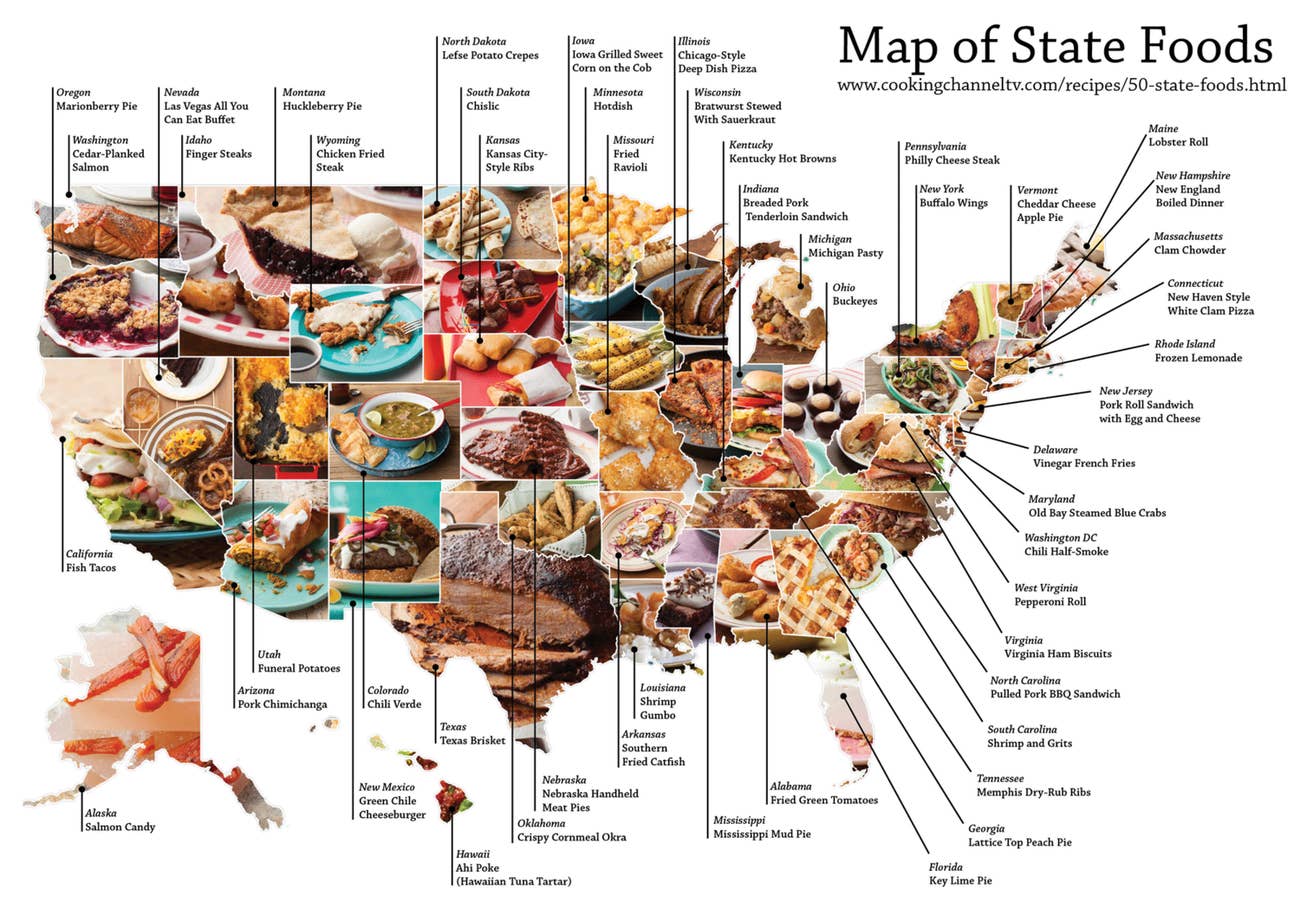
Infographic Friday

[Source: Today I Found Out ]